Technology
The Modern Operating Guide to Transport Management Systems (TMS) in Saudi Arabia
Freight in Saudi Arabia does not move the way it did five years ago. Distances between Riyadh, Jeddah, and Dammam are still long, but the expectations around delivery speed, cost, and visibility have changed completely. Vision 2030 has pushed logistics into the spotlight, and companies that still run transportation on spreadsheets and phone calls are […]
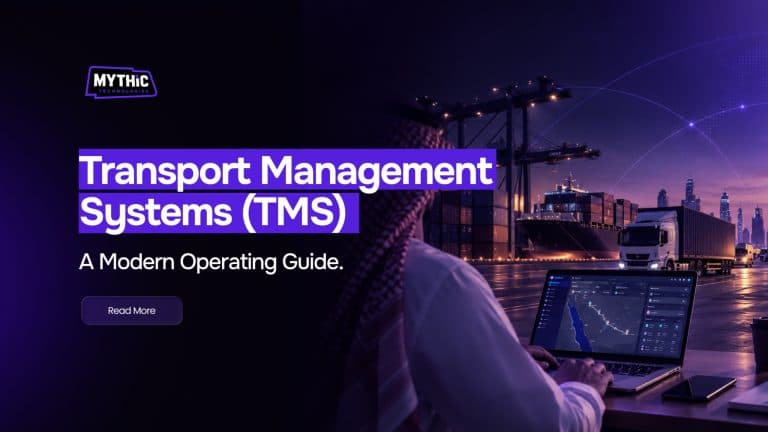
Freight in Saudi Arabia does not move the way it did five years ago. Distances between Riyadh, Jeddah, and Dammam are still long, but the expectations around delivery speed, cost, and visibility have changed completely. Vision 2030 has pushed logistics into the spotlight, and companies that still run transportation on spreadsheets and phone calls are starting to feel the strain.
This is where TMS software Saudi Arabia buyers come in. A transport management system, or TMS, is the platform that plans, executes, and tracks how goods move from one point to another. It replaces guesswork with data and gives operations teams a single place to manage carriers, routes, and shipments.
This guide walks through what a TMS actually does, why it matters for companies operating in the Kingdom, what features separate a strong platform from a basic one, and how to approach a rollout without disrupting daily operations. Along the way, it also looks closely at what separates a platform built for GCC logistics from a generic tool adapted loosely from somewhere else.
What Is a TMS?
A TMS is software that manages the planning and execution side of transportation. It handles order intake, carrier selection, route planning, dispatch, tracking, and proof of delivery. For a manufacturer, retailer, or distributor, it becomes the system that decides how freight should move and which vehicle or driver should carry it.
The value comes from connection. Before a TMS, transportation data usually lives in separate places: a spreadsheet for orders, a WhatsApp group for driver updates, and a phone call for delivery confirmation. A TMS pulls these pieces into one workflow, so a dispatcher can see order status, vehicle location, and delivery progress without switching between five tools.
For companies evaluating TMS software Saudi Arabia providers offer, the starting point is usually the same question: how much of our transportation process is still manual, and where does that manual work cause delays or cost us money?
Why Saudi Logistics Teams Need One Now
Saudi Arabia’s logistics sector is under real pressure to modernize. Vision 2030 has set ambitious targets around turning the Kingdom into a regional logistics hub, and projects tied to ports, rail, and industrial cities are increasing freight volumes across every region.
A few conditions make this shift more urgent for local operations:
- Long geographic distances:
Moving freight between Riyadh, Jeddah, and the Eastern Province involves real planning, not just booking a truck. - Rising e-commerce demand:
Faster delivery expectations put pressure on last-mile routing and driver scheduling. - Fuel and operating costs:
Poor route planning quietly adds cost that is easy to miss without proper tracking. - Customer expectations:
Businesses and consumers alike now expect delivery windows and real-time status, not vague promises.
Manual planning cannot keep pace with these pressures once a company grows past a handful of daily shipments. A TMS gives transportation teams the structure to handle more volume without adding headcount at the same rate.
There is also a compliance angle that gets less attention than it should. Freight movements across the Kingdom increasingly need to connect with digital documentation, customs processes, and government platforms. A disconnected, spreadsheet-driven operation makes this harder than it needs to be, while a connected TMS can pull the required data straight from the shipment record instead of recreating it by hand for every load.
Growth adds its own pressure. A company running ten deliveries a day can survive on phone calls and a shared spreadsheet. The same approach breaks down at a hundred deliveries a day, when a single missed call or an outdated spreadsheet cell can mean a driver sitting idle or a customer waiting without an update. A TMS is what lets that growth happen without the transportation team drowning in coordination work.
Core Features to Look For
Not every platform marketed as a TMS covers the same ground. Before choosing one, it helps to know what a modern system should actually include.
- Order and dispatch management:
The system should take an order from intake through to a scheduled dispatch without manual re-entry. - Route planning and optimization:
Good route planning reduces mileage, fuel spend, and missed delivery windows. - Real-time tracking:
GPS-based visibility lets teams see where a shipment is and flag delays before a customer has to ask. - Driver and fleet management:
Vehicle availability, driver assignment, and maintenance status should live on the same platform as the shipments themselves. - Proof of delivery:
Digital confirmation removes disputes and paperwork at the point of delivery. - Exception handling:
The platform should surface problems, like a delayed pickup or a failed delivery attempt, so someone can act on them quickly. - Reporting and analytics:
Cost per shipment, on-time performance, and carrier scorecards turn raw data into decisions. - Freight audit and cost checks:
Matching invoices against agreed rates catches billing errors before they eat into the budget.
None of these features work in isolation. A dispatcher who can see live vehicle locations but not driver availability still has to call around to confirm who can take the next load. The systems that add the most value connect these pieces so a dispatcher, finance team, or customer service rep can find what they need in one place rather than switching between five screens.
Mythic Express, the flagship transportation platform from Mythic Technologies, was built around this exact set of capabilities. It connects order intake, dispatch, fleet assignment, route optimization, and live tracking into one system, rather than leaving teams to stitch these steps together across separate tools.
Cloud Platforms Versus Legacy Systems
Most new TMS deployments in the Kingdom are cloud-based, and there are practical reasons for that shift. Cloud platforms do not require on-site servers, they update automatically, and they scale more easily when a company adds warehouses or delivery zones.
Legacy, on-premise systems still exist in some organizations, usually because they were installed years ago and never replaced. They tend to come with higher maintenance costs, slower updates, and weaker support for mobile driver apps.
A cloud TMS also tends to integrate faster with other systems. Whether the requirement is ERP, warehouse management, or a customer-facing tracking page, cloud architecture generally handles those connections with less custom development than an older, on-premises setup.
Cost is often the deciding factor between the two. On-premise systems carry upfront hardware and licensing costs, plus an internal team to maintain them. Cloud platforms typically shift that cost into a recurring subscription, which is easier for finance teams to plan around and easier to scale up or down as shipment volume changes through the year.
TMS, WMS, and ERP: How They Differ
It helps to be clear about what each system actually manages, since these terms get used loosely.
| System | What It Manages |
| TMS | Trucks, drivers, routes, and deliveries |
| WMS | Inventory, picking, packing, and warehouse workflows |
| ERP | Finance, procurement, and company-wide operations |
A TMS focuses on movement between locations. A warehouse management system, or WMS, focuses on what happens inside the four walls of a facility. An ERP sits above both, handling finance, procurement, and broader business operations.
These systems work best together. Order data from an ERP flows into the TMS for planning, and shipment status from the TMS can update the ERP or a customer portal automatically. Companies searching for tms software saudi arabia teams can implement quickly should prioritize a platform that connects cleanly with the ERP and WMS they already run.
Confusing the three is a common mistake in early software conversations. A company that actually needs better route planning and dispatch control will not solve that problem by upgrading its ERP, and a business struggling with warehouse picking accuracy will not fix that with a new TMS. Getting clear on which layer is causing the pain saves months of evaluating the wrong category of software.
What a Good Rollout Looks Like
Buying the software is the easy part. Getting a transportation team to actually use it well takes planning.
A realistic rollout usually follows this pattern:
- Map the current process:
Document how orders move today, including every manual step and workaround. - Clean the data:
Carrier lists, vehicle records, and customer addresses need to be accurate before they go into a new system. - Start with one region or fleet:
A phased rollout catches problems early without disrupting the whole operation. - Train dispatchers and drivers separately:
Each group interacts with the system differently, so generic training tends to miss the details that matter to them. - Review performance after 60 to 90 days:
Early data shows whether routes, carrier selection, and dispatch timing need adjustment.
Resistance from dispatchers and drivers is one of the most common obstacles during implementation, more than the technology itself. A platform with a simple mobile app and a dispatcher view that mirrors how the team already thinks about routes tends to see faster adoption than one that forces people to relearn their entire workflow.
It also helps to set expectations early about what changes in the first few weeks. Route suggestions may look different from what a dispatcher would choose manually, and that gap can create doubt before the team has enough data to trust the system. Walking through a handful of real routes together, side by side with the old process, usually settles this faster than any amount of documentation.
Choosing a TMS Built for the Saudi Market
Not every TMS on the market accounts for how logistics actually works in this region. A few selection criteria matter more here than in other markets.
- Arabic and English interface support, since drivers, dispatchers, and customers may prefer either language.
- Local or GCC-based hosting, which affects data residency and system responsiveness.
- Compatibility with local compliance and documentation requirements.
- Support and account teams based in the region, rather than a support desk operating in a different time zone.
- Integration experience with ERP and warehouse systems is already common in the Kingdom.
- A rollout process that accounts for local driver behaviour and route patterns, not a template built for a different country’s road network.
This is one of the reasons companies in the region increasingly look at tms software Saudi Arabia vendors have built specifically for GCC operations, rather than adapting a platform designed for a different market. Mythic Express was built in Saudi Arabia with this context in mind, connecting transportation, fleet, and delivery operations into a single operating layer designed around how regional logistics businesses actually run.
For a company weighing a handful of platforms, the deciding factor usually is not which one has the longest feature list. It is which one fits the daily reality of dispatchers, drivers, and the routes they run every single day. Mythic Express positions itself around that operational fit rather than a generic, one-size-fits-all setup.
The Bottom Line
A transport management system earns its place by removing the manual work that slows transportation teams down: scattered spreadsheets, phone-based dispatch, and delivery confirmations that depend on someone remembering to call. The right platform brings order intake, dispatch, route planning, tracking, and proof of delivery into one connected workflow.
For companies operating across Riyadh, Jeddah, Dammam, and beyond, the case for adopting a TMS is tied directly to Vision 2030’s push toward a more efficient, more visible logistics sector. Platforms like Mythic Express show what that connected approach looks like in practice, built around the realities of running transportation in the Kingdom rather than retrofitting a system designed elsewhere.
Choosing the right system starts with an honest look at where manual work is costing time and money today, and it ends with a platform built to grow alongside the operation, not one that needs replacing the moment volume increases. Whatever the starting point, the goal stays the same: fewer phone calls, fewer missed updates, and a transportation operation that runs on real, current data instead of guesswork and memory.